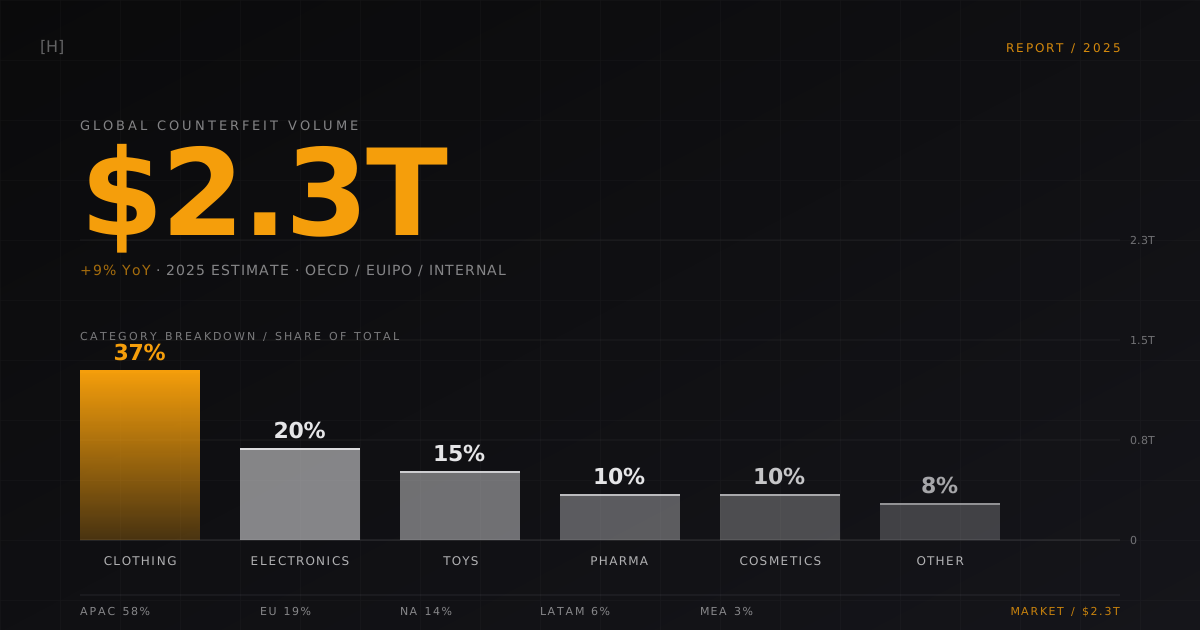
The global counterfeit market in 2025 reached an estimated $1.7 trillion, up roughly 9% year-on-year. The headline number gets cited often. The category breakdown β and where the year-on-year growth is concentrated β gets less attention but is more useful for brand protection planning.
This piece compiles what we've seen across our customer base in 2025, cross-referenced with WorldMetrics, OECD/EUIPO trade data, and EU Customs interception reports.
The headline numbers
For context: the global counterfeit market is now larger than the GDP of all but a handful of countries. It would rank in the world's top 12 economies if it were one.
Category breakdown
Where does the volume actually sit? The 2025 mix:
| Category | Share of global counterfeit value |
|---|---|
| Clothing & footwear | 37% |
| Electronics | 20% |
| Toys & games | 15% |
| Medications | 10% |
| Cosmetics & perfumes | 10% |
| Food & drinks | 5% |
| Other | 3% |
A few observations.
Apparel and footwear are stable at the top but the value mix is shifting. Counterfeits in 2025 increasingly target premium sportswear (running shoes, athletic apparel) where the gap between manufacturing cost and retail price is largest. Mass-market knock-offs are declining as fast-fashion legitimate prices dropped.
Electronics is the fastest-growing category measured by unit volume. Counterfeit chargers, accessories, and semiconductor components are flooding consumer and industrial channels. The EU's interception of counterfeit ICs jumped 31% in 2024 β much of which only came to light in 2025 enforcement reports.
Medications grew faster than any other category by value. This is the most dangerous trend β counterfeit pharmaceuticals carry direct mortality risk, and the trade has shifted from physical to online channels. The EU's FMD framework has slowed but not stopped distribution.
Regional flows
The supply side is concentrated. ~75% of all counterfeit goods intercepted by EU Customs in 2024 originated from a small set of source countries. The destination side is shifting:
- EU and US remain the largest destination markets by absolute value
- GCC and Southeast Asia are the fastest-growing destination markets, driven by import-dependent luxury demand
- Latin America sees the highest counterfeit penetration as a percentage of total category sales
For brand-protection planning, the implication is clear: enforcement at the destination border is necessary but insufficient. The verifiable identity must be in the product itself, scannable by anyone in any market.
What changed in 2025
Three structural shifts:
1. Resale platforms became the largest counterfeit conduit
For luxury and watches especially, the resale channel overtook physical street-market and untrusted-online distribution as the largest entry point for counterfeits into consumer hands. The platforms have invested heavily in authentication services, but the unit economics are tough β a manual authentication review costs $20β$50 per item and is increasingly fooled by high-quality fakes.
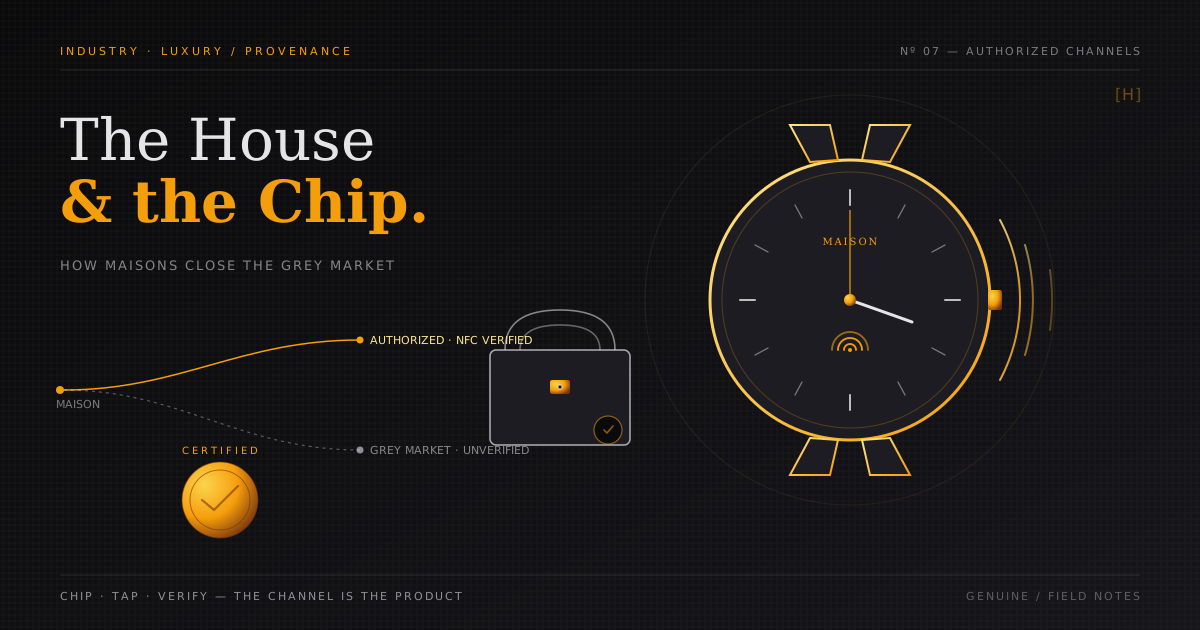
This is why brand-issued NFC verification is becoming standard. We covered this in detail in How luxury brands are killing the grey market.
2. AI-generated marketing materials made counterfeits indistinguishable visually
By mid-2025, generative tools had erased the visual gap between real and counterfeit product photography. Listings on grey-market sites are now visually impossible to differentiate from official channels. The only signal left is the physical authenticity check at the point of receipt β which puts cryptographic chip authentication in pole position as the trust signal.
3. The EU regulatory ratchet activated for the first category
The EU Battery Regulation hit force in mid-2024 and the data-collection enforcement mechanisms started to bite in 2025. We expect Q3 2026 to be the first significant enforcement headlines β and once the precedent exists, downstream categories (textiles 2027, electronics 2028) will see rapid investment by brands that don't want to be the precedent.
What this means for brand strategy
For brands in the top counterfeit-target categories, three implications:
1. Authentication infrastructure is now table stakes
The discussion in 2024 was "should we invest in authentication." In 2025 it shifted to "which platform do we deploy." Brands without an active program will be at a competitive disadvantage on resale-channel margin participation by end of 2026.
2. Verification is a marketing channel, not a cost line
Brands implementing NFC verification in 2024β2025 are seeing measurable lift in brand-trust scores and re-purchase intent β beyond the direct counterfeit-prevention savings. The consumer experience of tapping a product and getting an instant [VERIFIED] is becoming a desirable artifact of premium purchase, not a back-office overhead.
3. Cross-category platforms beat point solutions
Brands operating in multiple counterfeit-target categories (e.g. luxury house with bags, watches, and cosmetics) are consolidating onto single authentication platforms rather than category-specific tools. The schema overlaps are too significant to maintain three vendors.
What we're tracking for 2026
Three things we're watching closely as the year unfolds:
- First major EU customs blockage of non-compliant batteries β this will signal how aggressively the regulation is being enforced
- First major resale platform mandating brand-issued authentication for top-tier listings
- First major insurance-pricing differential for high-value goods based on authentication infrastructure
Each of these would be a compounding event for the category.
Where to start
If you're building a 2026 brand-protection plan, the framework is short:
- Map your SKUs against the counterfeit-target categories above
- Pick your top 20% by value β start there, expand
- Choose your chip strategy β see NTAG213 vs NTAG424 DNA
- Pilot one collection or product line before the year-end planning cycle
- Tie verification into your resale strategy from day one
The brands that move on a 2026 pilot will be in production by 2027. The brands that wait will be reading next year's report and realizing the gap closed without them.
Hashentic publishes a quarterly update of this report based on aggregated platform data and industry sources. Book a 30-minute briefing to walk through the segments most relevant to your portfolio.