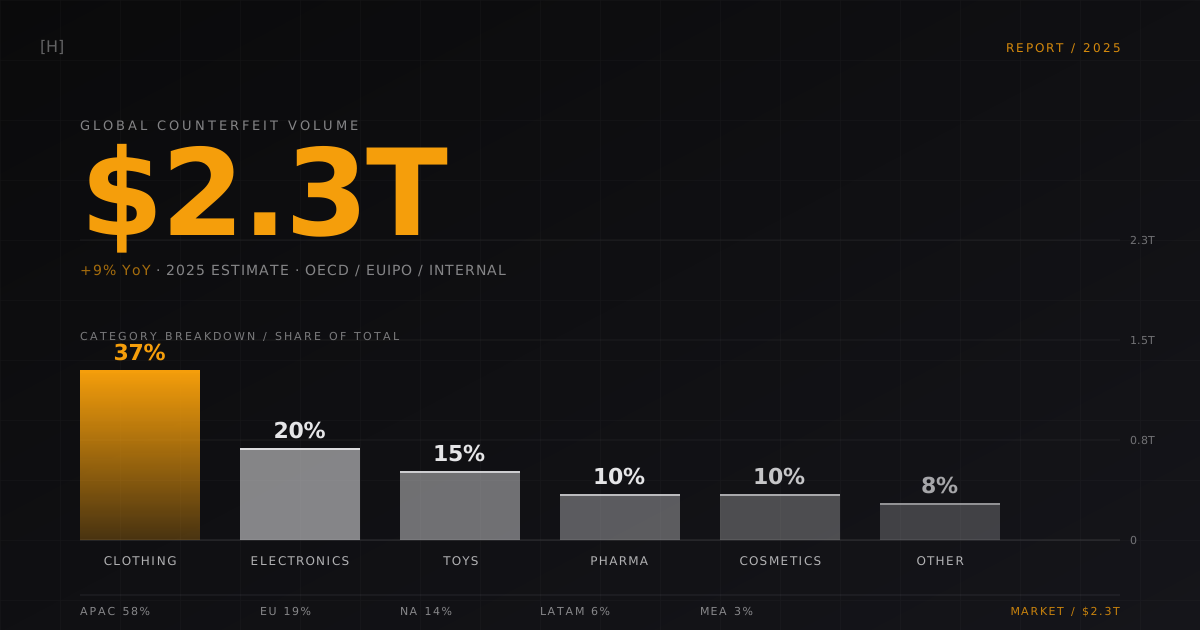
The numbers are uncomfortable. Industry analysts estimate that 2 in 3 luxury bags in active resale circulation are either outright counterfeit or grey-market parallel imports diverted from authorized channels. For watches, the global counterfeit market produces roughly 40 million fake units a year β more than every Swiss luxury brand combined ships annually.
For decades, the luxury industry treated this as a cost of doing business. The math is shifting in 2025.
Why now
Three forces are converging:
- Resale platforms went mainstream. StockX, The RealReal, Vestiaire Collective, and Chrono24 collectively handle billions in annual GMV. Each transaction creates a verification opportunity β and a verification liability.
- Gen-Z buyers expect to verify. Younger luxury consumers are more likely to authenticate before purchase than any prior generation. A brand that doesn't enable verification loses the resale channel entirely.
- EU regulation is closing the gap. ESPR and CSRD push transparency requirements onto adjacent categories (textiles 2027, leather goods following). The compliance infrastructure becomes a competitive moat once it's built.
The brands that move first own the resale signal for the next decade.
The architecture: invisible NFC
The solution that's quietly becoming the industry standard is NTAG424 DNA NFC embedded inside the product β invisible to the consumer, but instantly verifiable with a smartphone tap.
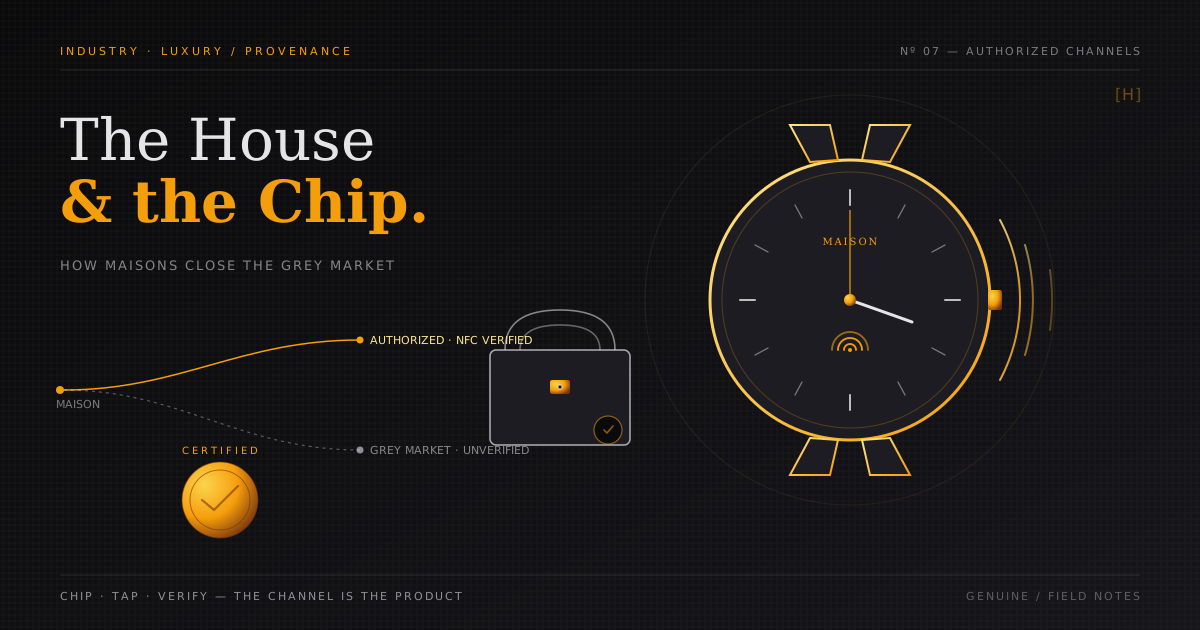
For luxury bags, the placement is typically inside the lining β a thin inlay sealed between the outer leather and the inner silk during manufacture. For watches, it's the case back. For wine, under the foil capsule or label. Each placement matters: it must survive normal use for 10+ years, must not be visually detectable, and must be readable through whatever material it sits behind.
We documented 14 production placement patterns in our Use Cases gallery β including the exact spot inside a sneaker tongue, under a wine foil, or on a watch case back.
How verification actually works
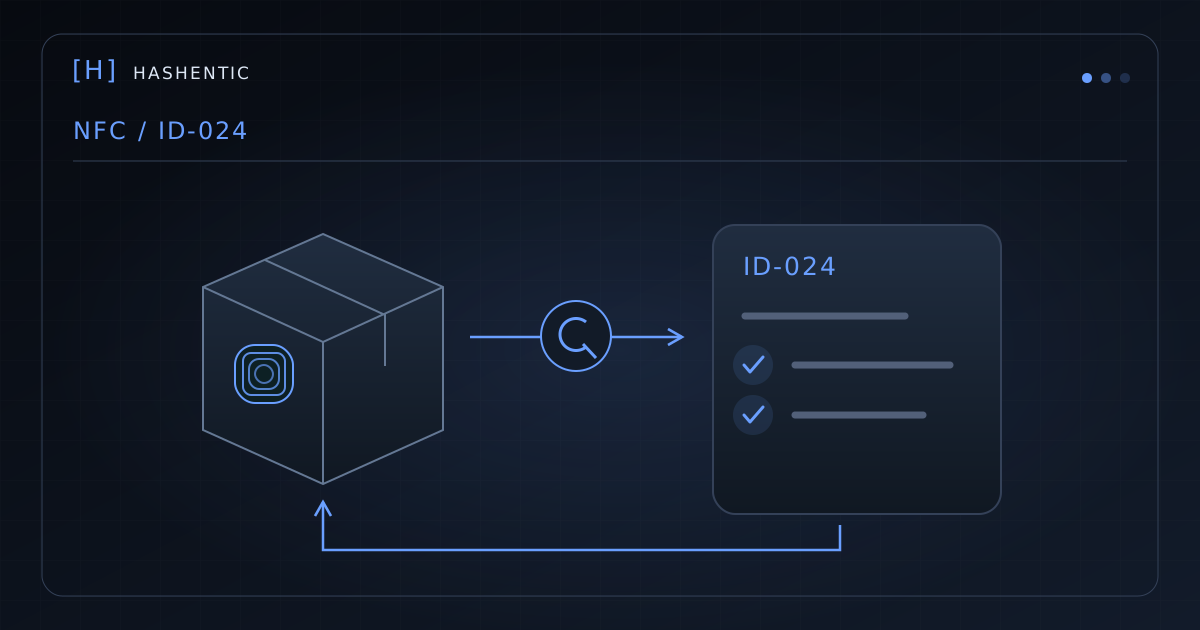
A buyer taps their phone against the tag. Three things happen in under one second:
- The chip generates a dynamic CMAC signature using a key the chip never reveals
- The brand's verification endpoint validates the signature against the master key (held in secure backend)
- The buyer sees a branded passport page: serial number, manufacture date, original retail location, ownership chain (if registered), and a
[VERIFIED]indicator
If the chip is a clone, the CMAC math fails immediately. If the rolling counter shows anomalies (the same chip "scanned" in two cities five minutes apart), the backend flags it for fraud review.
What changes for the brand
1. The resale channel becomes a brand-owned channel
Today, when a Birkin sells on a resale platform, the original brand sees nothing β no data, no relationship, no margin participation. With NFC verification, the brand can:
- Optionally charge a verification fee on each resale (most large platforms accept this)
- Capture the new owner's contact for after-sale services
- Track product velocity and pricing in resale, informing primary-market pricing
- Refuse verification on bags reported stolen, killing fence-and-resell economics
2. Consumer trust at the moment of purchase
For a β¬4,000 bag, the buyer's biggest fear is "is this real." Today they pay a third-party authenticator $300 for an opinion. With brand-issued NFC, that becomes a free, instant, brand-verified yes β the conversion lift on this alone has been double-digit in early pilots.
3. The grey market becomes auditable
Parallel imports β products legally manufactured but distributed outside the authorized regional channel β are tracked the same way. Brands can see in near-real-time when authorized inventory is being scanned in markets it shouldn't be in.
The numbers on a single SKU
We modelled this for a luxury bag retailing at β¬3,200, with a counterfeit rate of ~30% in active resale:
The unit economics aren't close. The infrastructure pays for itself within the first quarter of resale fee participation.
The objection: "won't it ruin the design"
The most common pushback from creative directors is aesthetic. The answer in practice: NFC inlays are smaller than a grain of rice and can sit between leather layers, inside lining seams, behind logo plates, or under any non-metallic surface. Consumers don't see them. Detection requires either an NFC scan or destructive disassembly β and the latter destroys the bag's resale value, so it's not a real attack vector.
For watches, the chip sits behind the case back where every brand already engraves serial numbers. For wine, it sits under the foil capsule that gets removed when you uncork the bottle anyway.
What this means strategically
The brands moving on this in 2025β2026 will set the industry pattern. By 2028 we expect:
- Major resale platforms to require brand-issued digital authentication for top-tier listings
- Customs and anti-counterfeit enforcement agencies to integrate with brand verification APIs
- Insurance pricing for high-value goods to differentiate by authentication infrastructure
- Secondary-market warranty programs (now controversial) to become standard once chain-of-custody is provable
The brands that wait until 2027 to start will be retrofitting against an infrastructure their competitors already own. The ones that start in 2025 will be issuing the verification standards everyone else has to integrate with.
Where to start
For luxury houses with existing inventory: pilot one collection with NFC. Don't try to retrofit historical product. Use the new collection to build the verification infrastructure, then expand annually.
For watchmakers: integrate during the next case-back redesign cycle. The chip costs nothing relative to a movement and the placement is already understood.
For wine houses: start at the next vintage release. The capsule application is the natural integration point β no production-line changes required.
If you want a confidential conversation about how this would work for your specific product line, book a 30-minute call. We've run pilots across all three of these categories and can sketch the cost and timeline against your portfolio.