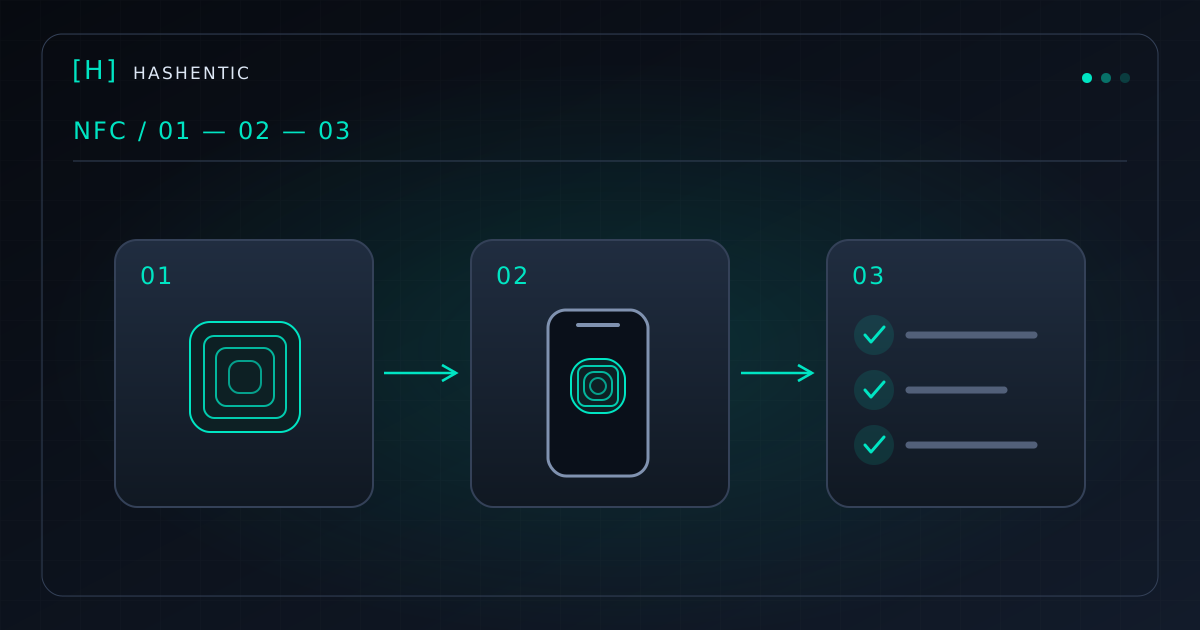
A successful NFC demonstration shows that one phone can read one tag. A useful pilot shows that your team can attach, configure, verify and support tagged products under ordinary working conditions.
Start with a limited product range and a written decision: what evidence would justify a wider rollout? The checklist below is a suggested pilot method, not a claim about results from a Hashentic customer deployment.
1. Define the verification outcome
Choose one primary job, such as checking a security tag before resale or opening a product passport after purchase. Describe what a successful scan proves and what remains outside the check.
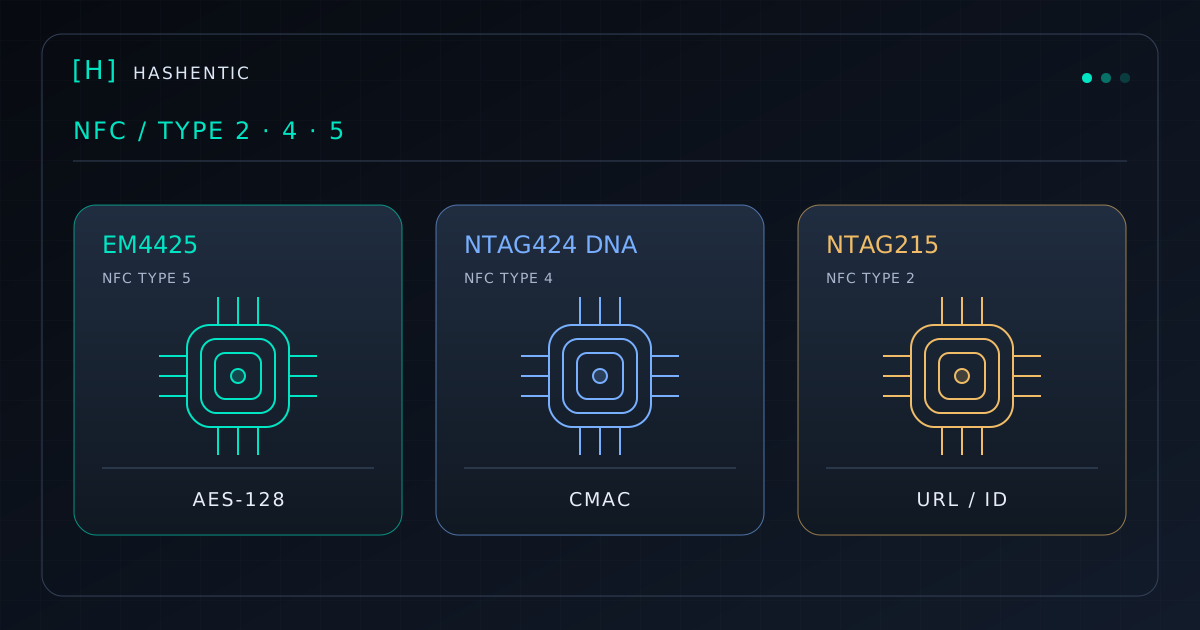
Agree the identity level before provisioning. A model code is useful for shared information; a batch supports production traceability; an item identifier supports individual history. Record the relationship between the product identifier and the tag identifier instead of treating them as interchangeable.
The NFC and QR comparison can help separate information access from authentication.
2. Test the assembled product
Use actual packaging, filled containers and finished materials. A tag that works on a desk still needs testing after installation. Compare candidate placements with the phones and readers your customers or staff are likely to use.
Include repeated attempts, different phone orientations and the cases customers normally leave on their phones. Record the exact device, placement and failure symptom. Test transport, opening, cleaning or bending where those conditions are part of the product's intended use; select the test method with your packaging team.
Add a visible tap instruction where appropriate. A hidden tag should not force the customer to guess where the phone needs to go. Use these placement examples as starting points, not as a substitute for a physical test.
3. Make provisioning repeatable
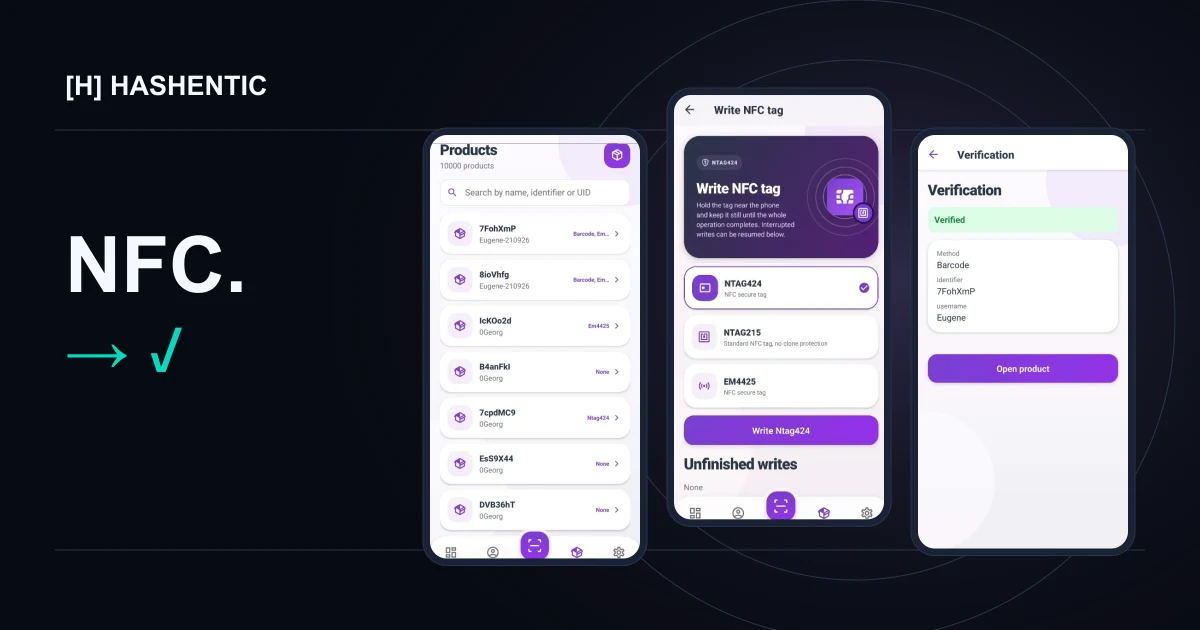
For secure tags, define who configures keys, who can access them and how each tag is associated with its product record. Separate pilot credentials from production credentials. Keep secrets out of screenshots, shared spreadsheets and printed URLs.
After writing a tag, verify it through the same customer-facing route used after shipment. Check that it opens the correct product, reports the expected result and cannot accidentally be assigned to a second item. NXP's configuration application note is a technical reference for NTAG 424 DNA setup; it does not replace a deployment-specific key-management process.
4. Test exceptions deliberately
| Test | What the team should establish |
|---|---|
| An unregistered identifier | A clear result with a support route |
| An altered authentication message | Rejection by the verifier |
| A previously submitted message | Consistent handling under the replay policy |
| A page refresh or duplicate request | No duplicate business action |
| A damaged or missing tag | A manual inspection process |
| A temporarily unavailable service | A readable retry message |
| A replaced tag | A controlled association change with history |
Swipe or scroll horizontally to compare columns.
For dynamic-message tags, the counter and message checks are part of the implementation. Do not translate every network error or repeated browser request into a claim that the product is counterfeit. Likewise, a valid message should not automatically trigger a refund, reward or ownership transfer.
5. Measure the whole journey
Choose targets before collecting results. There is no universal scan-success threshold that fits every product and channel.
- First-attempt access: successful first attempts divided by all attempted reads, reported by device and placement.
- Correct record rate: tested tags that open the intended product record.
- Provisioning rework: tags that need rewriting, replacement or reassignment.
- Completion time: time from finding the tap point to understanding the result.
- Support demand: questions and manual interventions per tested product.
Record failures as carefully as successes. An aggregate average can hide a problem with one packaging material or a common phone model.
6. Make the rollout decision explicit
Review the results with packaging, operations, support and the verification-system owner. Assign each unresolved issue an owner and a retest condition. Define a way to pause shipment or switch to an information-only fallback without presenting it as a successful secure verification.
Hashentic provides product records, tag verification and workflow tools that can form part of this process. Review the platform and request a pilot discussion with your product samples, expected volumes and acceptance criteria. If returns are part of the pilot, use the returns workflow guide to extend the test beyond the first sale.