A customer scans a code on a bottle and sees a polished page saying “genuine.” What was actually checked: the existence of a product record, the identity of a security chip, or the bottle itself?
That distinction matters more than whether the customer uses a camera or taps a phone. QR and NFC are ways to carry data. The verification process determines what the result means.
Three approaches with different jobs
| Approach | What the phone receives | Useful for | Main limitation |
|---|---|---|---|
| Printed QR code | A fixed identifier or URL | Product information, instructions, passport access | The visible code can be copied |
| Static NFC tag | Stored data, often a fixed URL | Convenient tap access and customer engagement | A fixed link is not a fresh cryptographic proof |
| Secure NFC with dynamic messaging | A message the backend can authenticate | Checking a registered security tag | Requires secure configuration and a reliable tag-to-product attachment |
Swipe or scroll horizontally to compare columns.
A serialized QR code can still support useful checks. A system may flag an unknown identifier or an unusual history. However, a copied code carries the same identifier as the original. GS1 explains this distinction between authenticating data and identifying a particular physical item in its Digital Signatures guideline.
What secure NFC adds
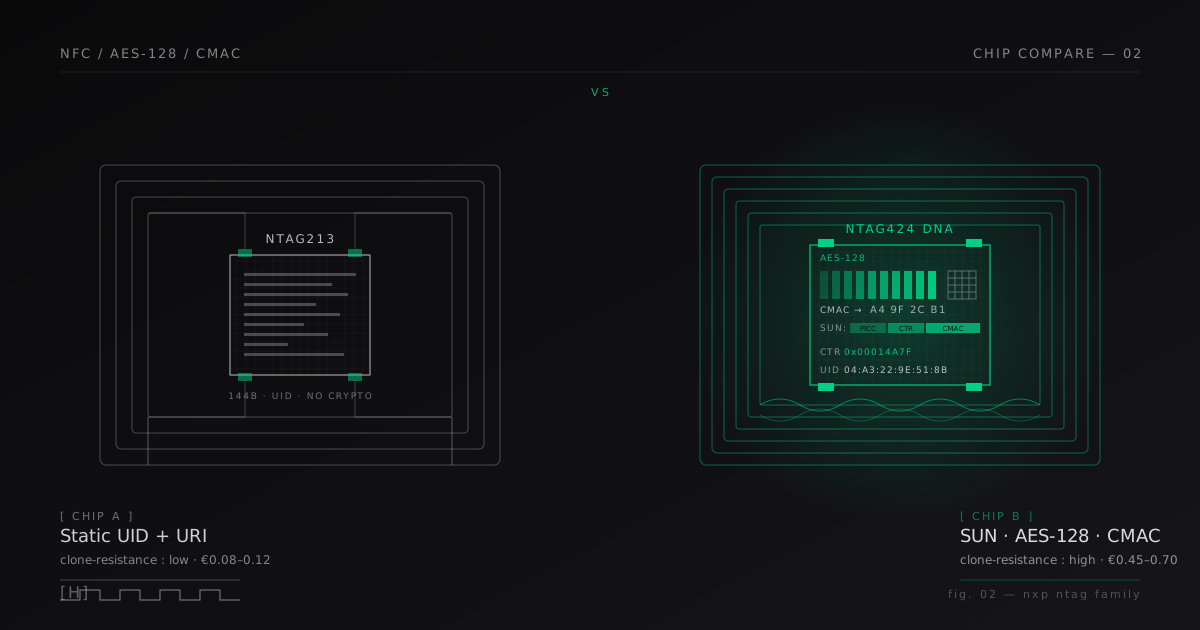
NTAG 424 DNA supports AES-128 and dynamic authentication messages. The backend checks the message; finding a product ID in a database is not the same operation. See the NXP datasheet.
The deployment still needs rules for previously seen messages, failed reads and tag replacement. A valid tag response does not by itself prove that a handbag is undamaged, that a bottle contains the original liquid, or that a tag has never been moved. Physical attachment and operational checks complete the design.
For example, a tag inside a durable product can remain useful during servicing. A tag on disposable packaging may leave the product as soon as the customer opens it. Choose the attachment around the question you want to answer later. Our placement examples show the kinds of locations to test.
QR and NFC can share a product record
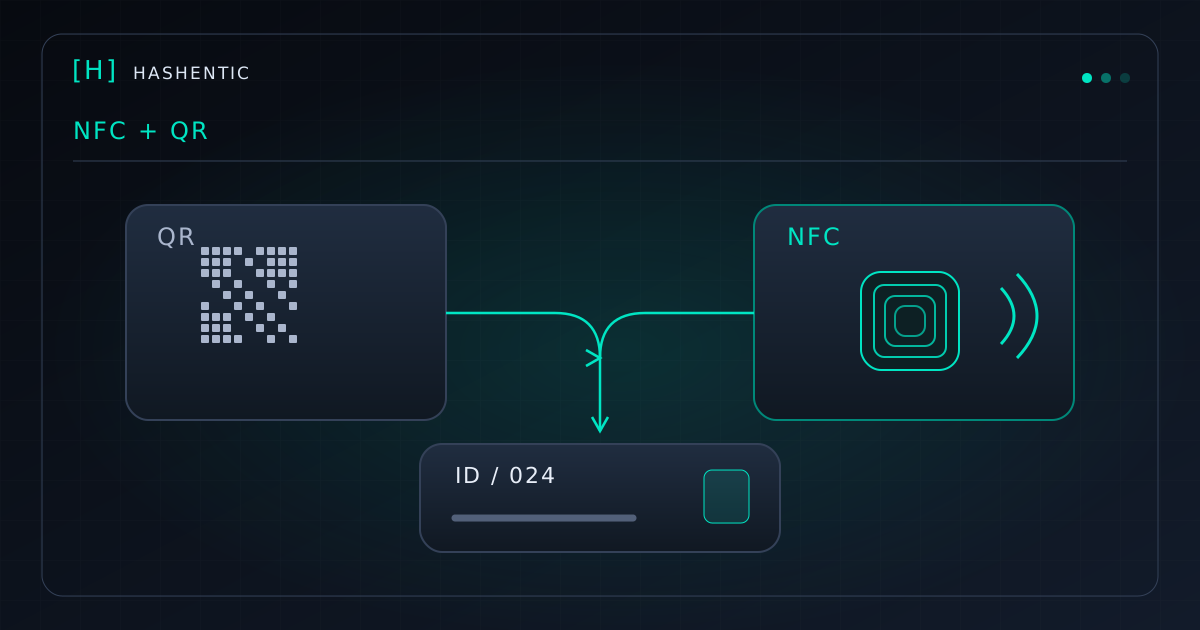
Many products benefit from both carriers. A QR code can provide visible access to instructions, while secure NFC adds a separate tag-authentication step. Both routes should resolve to the intended product record, with the interface showing which check was performed.
GS1 Digital Link provides a web-compatible way to express product identifiers. It can support access to different resources without making the product page's current location the permanent identity of the product. The GS1 quick-start guide explains the distinction.
Do not give a QR fallback the same “secure tag verified” status as a successful cryptographic check. “Product information found” is a useful result in its own right. It should not imply evidence the scan did not collect.
Choose around the customer journey
For a care label, the main requirement may be that instructions remain easy to find. For a collectible, the brand may need an item identity that staff can inspect at resale or return. For a sealed package, the relationship between the seal and the contents needs separate attention.
Before ordering tags or printing artwork, write down:
- The exact claim displayed after each type of scan.
- Whether the record represents a model, batch or individual item.
- Where the carrier remains throughout the product's expected life.
- What happens when the carrier is missing or unreadable.
- Who maintains the destination, product data and verification service.
If your goal includes a digital product passport, check the applicable carrier requirements separately. A technology choice alone does not establish regulatory compliance. Start with the DPP data-model guide.
Compare complete workflows, not just label prices
Printing, tag attachment, provisioning, quality control, verification hosting and exception handling all belong in the cost comparison. A cheap carrier that causes repeated support calls may cost more to operate than its purchase price suggests. Measure that in your own process rather than relying on a universal return-on-investment claim.
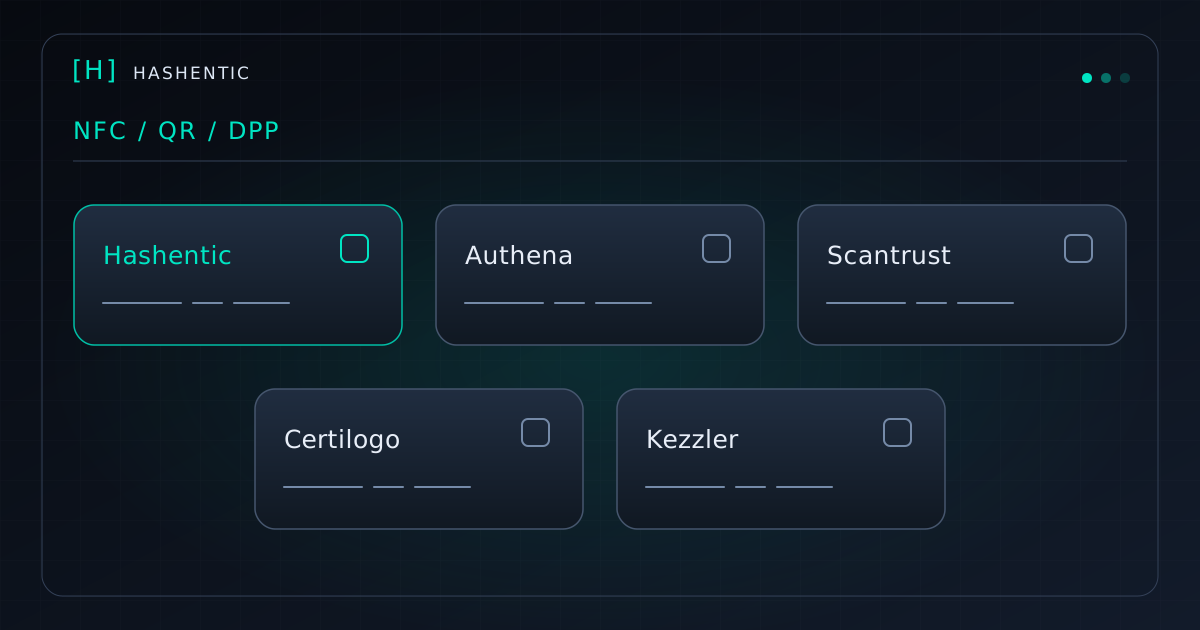
Choosing a provider? Read our comparison of Hashentic, Authena, Scantrust, Certilogo and Kezzler for documented approaches and questions to use in demonstrations.
Explore Hashentic's verification technology, then use the NFC pilot checklist to test the approach on your product. Request a demo with a sample package and the verification result you want customers to see.