Choosing a product authentication platform means choosing how you will connect a physical item, a digital record and the people who use it. A packaging team, a brand protection team and a digital product passport team may need different things from the same scan.
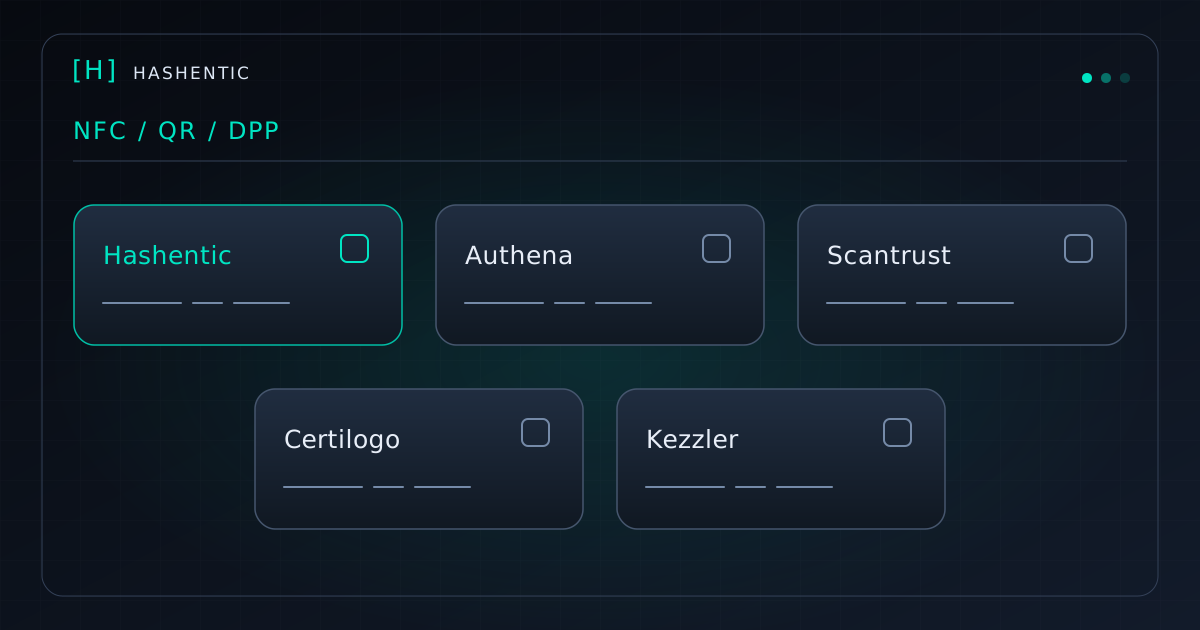
This guide compares Hashentic, Authena SHIELD, Scantrust, Certilogo and Kezzler across those needs. Begin with the decision table, then use the questions below to prepare comparable demonstrations.
Individual platform comparisons
Choose a provider for a focused capability table, pros and cons, and a practical pilot plan.
- Hashentic vs Authena — Product Integrity and the Customer Journey
- Hashentic vs Scantrust — Secure NFC vs Printed Secure QR
- Hashentic vs Certilogo — Authentication Across Purchase and Resale
- Hashentic vs Kezzler — Secure Scans or Supply-Chain Event Data?
How this comparison was prepared
Reviewed on 5 September 2026. Written by Hashentic, one of the providers compared. The descriptions use the linked official product documentation; Hashentic's description also reflects its implementation. We did not run a comparative security benchmark or obtain equivalent commercial quotes. The suggested shortlist is our assessment of fit, not a measured ranking.
The table highlights capabilities relevant to this buying decision. It is not a complete feature inventory. A capability omitted from a row should be confirmed with the provider, rather than treated as unavailable.
Comparison at a glance
| Platform | Documented approach | What to validate in your pilot |
|---|---|---|
| Hashentic | Secure NFC verification with NTAG 424 DNA; configurable product pages and records | Tag attachment, repeated-message handling and the branded customer journey |
| Authena SHIELD | Physical-digital seals, product authentication and a producer dashboard | Seal behaviour after opening and the required traceability workflow |
| Scantrust | Printed secure QR codes with a copy-detection graphic | Print quality, camera authentication and packaging wear |
| Certilogo | Digital IDs, supply-chain controls and anti-fraud analysis across QR, serialized labels and NFC | Your chosen tag format and the purchase or resale verification journey |
| Kezzler | Product and event data, lifecycle traceability and serialized identities for verification | Partner data exchange, record ownership and event coverage |
Swipe or scroll horizontally to compare columns.
Several providers address both authentication and passports. The useful distinction is how the proposed configuration handles your product and data, rather than whether its website mentions DPP.
Hashentic also supports EM4425 for cryptographic NFC verification and NTAG215 for product-information access. The supported-chip guide explains the scope and differences.
Hashentic vs Authena: define the physical check
Hashentic's secure NFC path validates the tag message and checks its read counter. It can reject a previously used authentication message. The verification result can lead into a configurable product experience; see the platform overview.
Authena SHIELD combines a physical-digital seal with authentication and unit tracking. Its customer interaction can work without an app download. Authena also describes DPP identities accessible through QR, barcodes or NFC.
For a sealed bottle or cosmetics package, ask both teams to demonstrate the same intact, opened and damaged samples. Establish what the customer sees after a legitimate opening and what remains attached to the product. A successfully authenticated tag and evidence that packaging has remained sealed answer different questions.
Include Authena when the seal and its operational handling are central to the project. Include Hashentic when you want to evaluate secure NFC verification alongside configurable product records and customer pages. Validate both against the required attachment and lifecycle; those recommendations do not establish a security winner.
Hashentic vs Scantrust: secure NFC or a printed security graphic
Scantrust's secure QR technology adds a printed graphic designed to reveal copying. It should not be equated with an ordinary QR link. Its authentication tools support mobile-browser and app flows; the documented browser journey includes photographing the secure code after opening the authentication page.
With Hashentic's NTAG 424 DNA path, the authentication evidence comes from a security chip's dynamic message. With Scantrust's described approach, it comes from analysis of the printed security graphic. Compare the complete interaction, including failed attempts and recovery.
Include Scantrust when a printed carrier is an important packaging requirement. Include Hashentic when an embedded NFC tag and a tap interaction fit the product. Test your actual substrate, finish, shape and phone mix before drawing conclusions about usability or cost. Scantrust also offers a DPP solution, so this choice is not simply authentication versus passports.
For the underlying carrier distinctions, read NFC vs QR for product authentication.
Hashentic vs Certilogo: map the whole customer journey
Certilogo describes an authentication system combining digital identities, supply-chain controls and AI-assisted anti-fraud analysis. Its supported tag approaches include NFC as well as printed identifiers. Its DPP offering also includes integration with other passport providers.
Include Certilogo when you are evaluating authentication across purchase and resale journeys. For a Hashentic comparison, request the same branded pages, product records and exception scenarios. The useful question is which proposed setup gives your customers and support team the evidence they need at each stage.
Demonstrate an initial purchase, a second-hand purchase and a product with a missing or damaged identifier. Ask how uncertain results reach human support, what information each party can access, and which partner integrations are included in the proposal. Do not infer ownership, condition or refund eligibility from a successful tag check alone.
Hashentic vs Kezzler: start with the data boundary
Kezzler documents event-data exchange, lifecycle tracking and ProductVerify. Its Q2 2026 platform update describes passport template profiles for different markets and use cases.
Include Kezzler when coordinating records and events across several systems or trading partners is a major requirement. With Hashentic, start from the product records and passport experience and demonstrate how your existing systems will provide and maintain the required data.
Give both teams the same small dataset: one model, two batches, several individual items and a correction to supplier information. Require an explanation of which records change, which history remains, and how a partner retrieves an authorized view. Ask separately how the proposed carrier supports physical authentication. A lifecycle record alone does not answer that question.
Use the DPP data-model guide to prepare that sample. Confirm applicable passport requirements for your product separately from selecting software.
Compare the full cost and exit terms
This review does not establish which provider is cheapest. Ask for quotes based on the same annual item volume, active-record lifetime, markets, scan assumptions and support requirements.
Request separate lines for carriers, printing or provisioning, attachment, platform fees, integrations, data migration, support and replacement handling. Also clarify:
- Who controls the printed or encoded destination domain.
- Which records and events you can export, and in what format.
- What happens to products already in circulation when a contract ends.
- Who approves product-data changes and resolves failed checks.
- Which integrations are available now and which require project work.
Use the same acceptance test for every finalist
Choose the checks before seeing the demonstrations. Include a genuine sample, an unreadable carrier, a copied identifier or repeated message where applicable, a data correction and an export exercise. Define the expected outcome for each method rather than forcing different technologies through an identical technical test.
Record completion rates, time to a useful result, exception handling and staff effort. These are measurements to collect in your pilot, not results claimed by this article.
Use our NFC pilot checklist to structure the work. To evaluate Hashentic, request a demo with your product samples and requirements. Ask every shortlisted provider to work from the same brief so the comparison remains useful when you move from a demonstration to production.
For a detailed capability table and pros and cons, see Hashentic vs Qliktag, Narravero and Securikett.