An NFC label turns a product into something a customer can check: they hold a phone to it and a brand page shows the result. Whether that counts as anti-counterfeit protection depends on two things. The chip and the server check authenticate the read; the label build and attachment tie that result to the product. An NFC label with a static link can be copied. A correctly configured secure chip produces a new, cryptographically protected message on every read.
This article explains what an NFC label is made of, which chips suit anti-counterfeiting, how to choose the build and attachment, and where the limits are. For the flow from tag to result page, see the overview of NFC authentication for products.
What an NFC label is made of
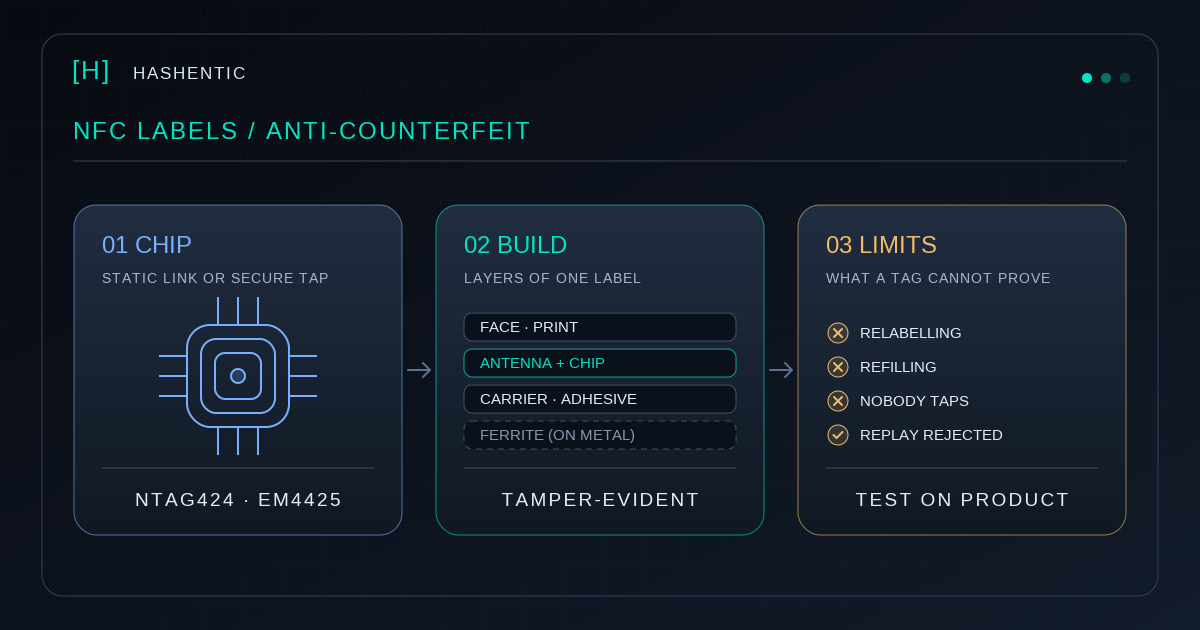
An NFC label is a stack of layers. Each one is a separate decision for anti-counterfeiting:
| Layer | Job | What matters |
|---|---|---|
| Chip | Stores the data and, in secure types, does its own cryptography | Fixed link or cryptographic message |
| Antenna | Powers the chip from the phone's field | Size and shape set the read distance |
| Carrier and adhesive | Hold chip and antenna on the product | Surface, temperature, moisture, removal behaviour |
| Face material | Protects the inlay and carries print | Abrasion, cleaning agents, room for a prompt |
Swipe or scroll horizontally to compare columns.
Chip and antenna together are called an inlay. Label converters turn it into a sticker, a hang tag, a sewn-in label or a seal.
Which chip protects against copies?
The key difference is between two classes of chip:
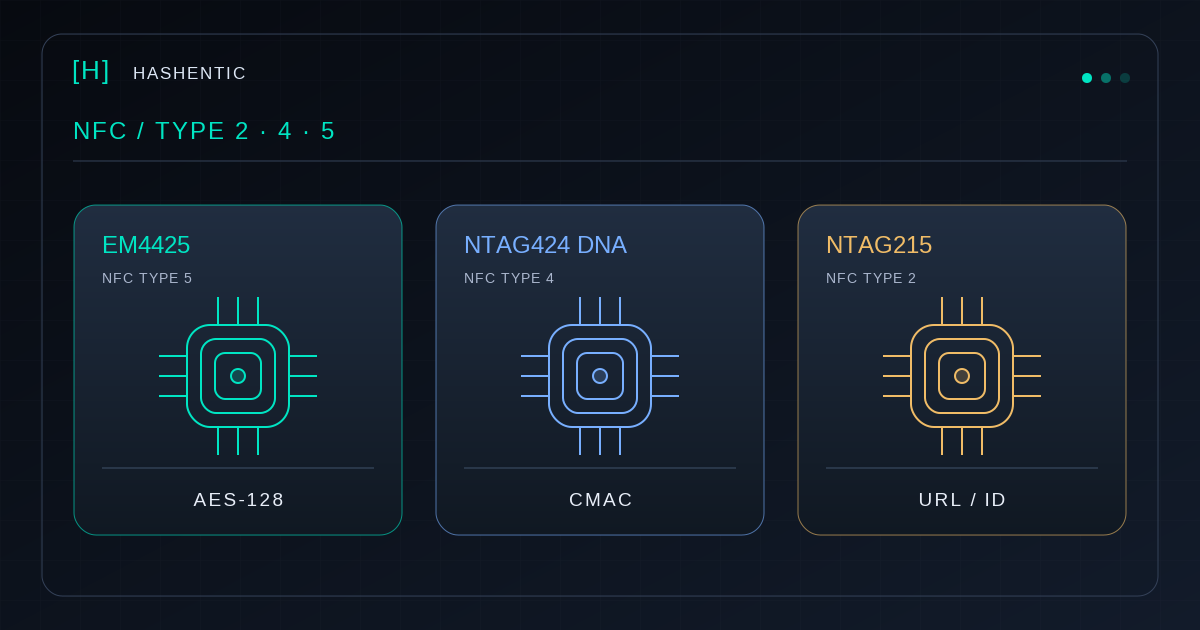
- Chips without a secret key such as NTAG213 or NTAG215. A static URL stored on them can be read by any NFC phone and copied to another sticker with a compatible NFC writer. These labels lead reliably to product information, but they do not show that the tag is genuine.
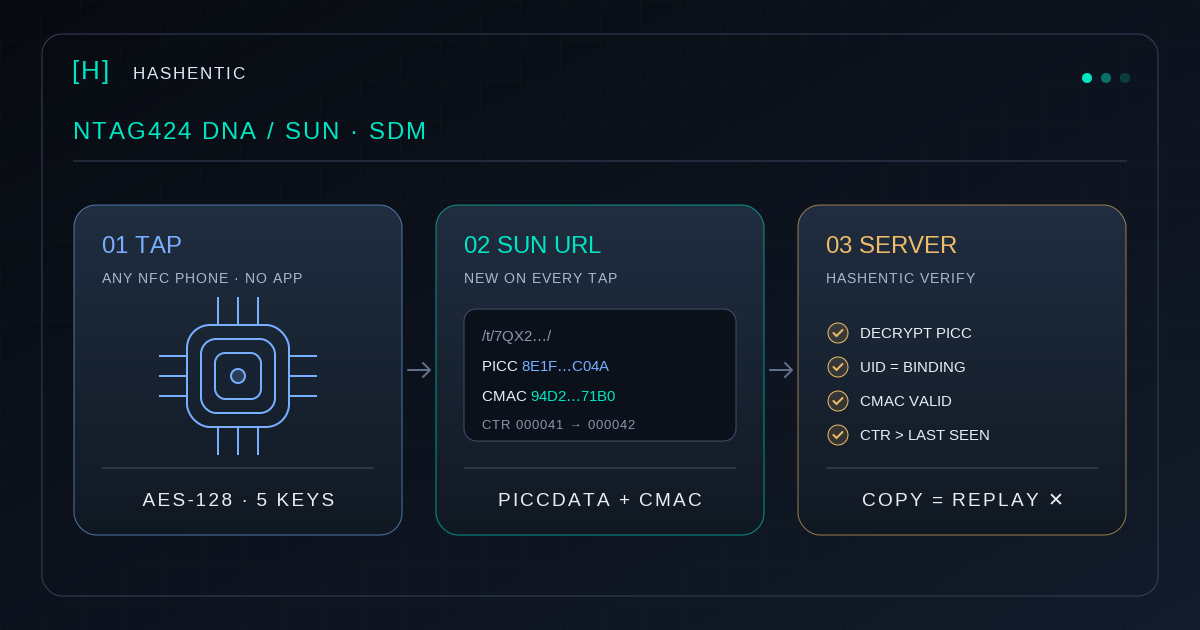
- Secure chips such as NTAG424 DNA or EM4425. They hold a secret key that cannot be read out and, once configured for it, produce a new message on every read. The server verifies that message and accepts it only once. A copied URL can pass at most once: after that message has been checked, any reuse is rejected.
How the authenticated message is produced and checked is covered in NTAG424 DNA explained. The differences between the supported chips are in the guide to supported NFC chips.
Hashentic never presents an NTAG215 lookup as a cryptographic check. The same brand page keeps it visible whether a secure chip was verified or a product record was simply opened.
Choosing the build and attachment
A secure chip helps little if the label peels off undamaged and can be stuck on another product. Plan three points together with the label converter:
- Surface. Metal and liquids detune ordinary NFC antennas. On-metal builds add a ferrite layer; on bottles and jars a different position often helps. Metal tolerance and chip security are separate properties.
- Removal protection. Tamper-evident labels tear when peeled or leave a visible pattern. In some builds the antenna breaks and the tag can no longer be read. Check on the real product that removal actually leaves traces.
- Position. Customers have to find the tag. A prompt on the pack or label and a spot a phone can reach comfortably decide whether anyone checks.
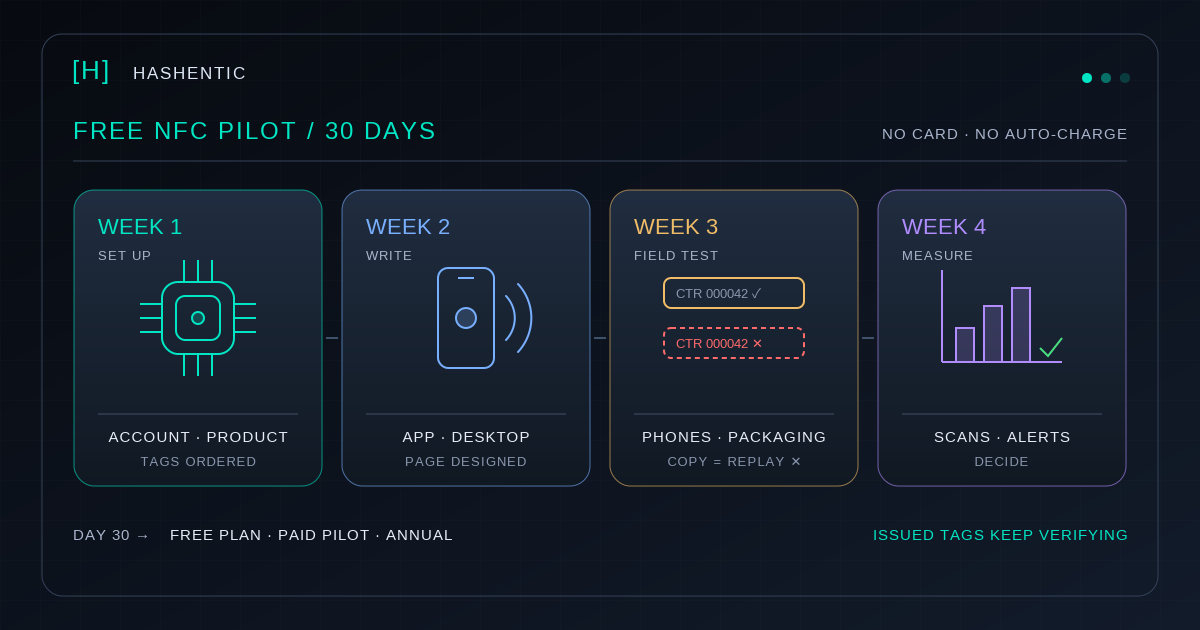
Test the finished build with the phones your customers use: filled bottle, closed pack, sewn-in label. The NFC pilot checklist walks through these tests.
What the customer sees
No app is needed for the check. An NFC phone reads the tag and opens the verification page in the browser; on an iPhone the customer taps the notification that appears. With a secure chip, the server verifies the message before the result appears and shows it alongside the brand's product information. Failed and unusual checks are visible to your team in the admin area.
Labels are written before application or at the line, with the Hashentic app on a phone or with the desktop utility and a USB NFC reader.
Limits: what an NFC label does not prove
The check shows that a registered chip produced the current message. It does not show that the chip is still on the original product or that the contents are unchanged.
Three practical limits follow:
- Relabelling. A genuine label on a counterfeit passes the check. Removal protection and a position that cannot be opened unnoticed address this.
- Refilling. On bottles and jars the label protects the container, not the contents. A seal across the closure is a separate construction.
- Products nobody checks. Protection only works when customers, retailers or service staff actually tap. Plan prompts and a reason to scan.
Whether NFC, a QR code or both fit your product is the subject of NFC vs QR for product authentication.
Frequently asked questions
Can an NFC label be copied?
The visible content can: any URL can be read. With a fixed-link label that yields a working copy. With a secure chip the URL that was read is spent after its first check, and the key needed for new messages never leaves the chip.
Do customers need an app?
No. Android phones with NFC and iPhone XS or later read NFC links without an app. A compatible Android phone opens the link directly or shows a prompt, the iPhone shows a notification to tap, and the verification page opens in the browser.
Do NFC labels work on metal?
Only with a suitable build. Ordinary inlays often become unreadable on metal; on-metal labels add a layer that separates the antenna from the surface. Always test on the finished product.
What does it cost to start?
The cost is made up of labels, encoding and the platform. Platform pricing is published; you buy labels from a converter of your choice. A free 30-day pilot shows whether the build works on your product.
Want to test NFC labels on your own product? Request a demo and bring a sample of your packaging.